Monday, May 22, 2006

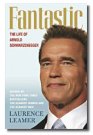
Fantastic : The Life of Arnold Schwarzenegger


Editorial Reviews

America's love affair with machine brutalism spills over into this somewhat smitten biography of its foremost icon. Leamer (The Kennedy Women) chronicles Schwarzenegger's progress from bodybuilder to action-movie megastar, then California governor, visiting along the way his romance with Kennedy scion Maria Shriver and feud with rival Hollywood muscle-head Sylvester Stallone. It's a tale of relentless self-promotion: Schwarzenegger's fanatical weight-lifting routines are nothing compared with his grueling publicity marathons, including 94 puff-piece interviews in one day for Last Action Hero. Leamer gives his subject a bombastically vain personality, then struggles to make it appealing. He celebrates Schwarzenegger's room-filling ebullience, his "emotional wisdom" and "agape." He discerns a "subtle, ironic distance" in Schwarzenegger's acting. And Leamer downplays Schwarzenegger's alleged habit of groping women, chalking it up to "signals" sent by women who secretly welcome his advances, a casual European attitude toward sex that is "frustrated and puzzled" by American "political correctness" and a fun-loving spirit that "moves toward whatever is most joyful and gives him pleasure." The author is less indulgent toward what he sees as Schwarzenegger's substance-free political campaigning and unwillingness to grapple with California's long-term budget crisis. His book is not fantastic, but it's well researched and moves along at a pleasantly robotic clip.

A fantastic read about a fantastically successful guy, June 10, 2005

A revealing look into what makes the Governator tick. This excellent biography describes Arnold's vision and the inner drive that made him successful as a body builder, actor, politician, and family man. It appears to be a very objective and fair portrayal, one that is interesting and very well written. Highly recommended.

The Truth About A Fantastic Character, July 3, 2005

All about Arnold Schwarzenegger, his friends, his family and his incredible climb to fame and fortune. The author has managed to truly present the life of Schwarzenegger without either a negative or a positive bias. The author has been able to tell the story from the middle position giving the reader the truth, good and bad, about his subject. Schwarzenegger is a very interesting person, but not a god-like person as many of the voters in California hoped he would be.

By Amazon.com

Monday, May 15, 2006

Thank You For Taking Interests In My Blog.


Hi Friends! Thank You & Enjoy Life.

Hi, my name is Sean. I'm 34 years old and I'm from Singapore. Have you ever wonder why my website is called Credit Plus Health?

Actually, Credit Plus Health is my philosophy in life. Because I believe in having a good health to enjoy the wealth that you have created. This site is created solely for people to learn about how to create your wealth and at the same time pay attention to your well being so that they can last longer to create more wealth and enjoy it . Hopefully, with this created wealth they will share the knowledge and contribute back to mankind to make this world a better place for all of us.

I enjoy every moment of my life challenging myself to the very limits that I possibly can whenever possible. Dare to Dream is the other philosophy that I hope people will take away from me. My ability to dare to dream big and turning all these visions into actions has allowed me to fulfill my dreams.

Don't be afraid to fail in life because those failures will be the learning points for you to succeed later if you are able to bring yourself back and focus on your plans and stay even more motivated to achieve your dreams.

So much about philosophies. I have traveled to many parts of the world because one of my dreams is to see the world. I will continue to explore every single corner of the world till I die. I have tried many jobs in my life. This are the list of jobs I have tried in my life : waiter, dish washer, painter, construction worker, promoter, salesman, technician, flight attendant,
lightings designer, engineer, personal trainer, educator, competitive bodybuilder, model, etc.

Currently, I an investor, entrepreneur, bodybuilder and educator.

My hobbies includes bodybuilding, traveling, reading, putting my creative ideas into possibilities, playing badminton, investing, surfing the internet, learning and keeping up with changes in the world. Meeting people and learning about the various cultures in this
world.

Last but not least, I enjoy what I am doing in life and I hope that this creation of mine,"Credit Plus Health By Sean Toh", will be able to share with you the knowledge that I have learned in my life. Thanks and enjoy your life!


By Sean Toh

http://creditplushealth.org/

Contact Sean Toh

For Advertising Enquiries, Products to be listed in Financial Products & Services or Health Products & Services to be sold, Links Exchange in Other Links, Blogs to be included in Blogs Friends or other possible new opportunities, feel free to drop me a line or give your comments about my site at seantoh@creditplushealth.org.

Saturday, May 13, 2006

Can Dogs Smell Cancer?


Can Your Dog Help You If You Have Cancer?

Question

I heard that dogs can sniff out cancer. How would a dog owner know if his dog smelled cancer on an apparently healthy family member?-- Dave

Answer

Actually, the first hint that dogs can smell cancer came from a case in England when a pet Dalmatian named Trudi kept sniffing at a tiny mole on her owner's leg. The mole turned out to be a malignant melanoma, a form of skin cancer that can be fatal if not caught early. This case was written up in the British medical journal The Lancet in 1989, and since then a number of scientific studies have confirmed that dogs can smell cancer - just as they can sniff out drugs and explosives and track fugitives. Dogs have a sense of smell that is at least 10,000 times more powerful than that of humans, so the notion that Fido can sniff out disease isn't as far-fetched as it sounds. Dogs can also pick up early signs of epileptic seizures too subtle to be noticed by their owners, and can then warn them to prepare for the seizures.

The most recent study to confirm that dogs can sniff out cancer comes from the nonprofit Pine Street Foundation in California. Three Labrador retrievers and two Portuguese water dogs were trained to sit or lie down in front of breath samples from patients with lung or breast cancer and to ignore samples from healthy people. The researchers reported that the dogs were 88 to 97 percent accurate in their "diagnoses." The California study was the latest of several confirmatory studies.

In September, 2004, the British medical journal BMJ published results of the first double-blind, peer-reviewed study, which concluded that dogs could be trained to recognize and identify bladder cancer. Six dogs selected a urine sample from a patient with bladder cancer out of seven samples, six of which were non-malignant. In addition, British researchers have reported that 16 cancer cases have been detected by pet dogs that showed signs of being anxious and upset in the presence of the "scent" of the disease.

I doubt that dogs will ever take the place of MRIs or other medical tests designed to diagnose cancer, but they clearly do have remarkable powers of detection. Before we can harness those powers, we need more research to confirm and understand the phenomenon, which demonstrates that there is more out there than we can know with our senses. It's good to keep that in mind. Stay tuned. I'll keep you posted on future developments.

By Andrew Weil, M.D.

http://creditplushealth.org/

Monday, May 01, 2006

World-Class Mentors for your Child


Steps To Empower Your Child

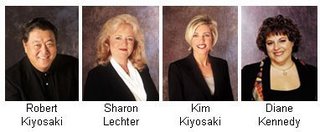
The mentors are, Robert & Kim Kiyosaki, Sharon Lechter and Diane Kennedy, all self-made millionaires. Robert and Sharon are co-authors of the best selling "Rich Dad: Poor Dad" series. Kim Kiyosaki is one of the co-founders of Cash Flow Technologies and is a passionate advocate for educating women about money. Diane Kennedy is a specialized accountant. Here are some practical insights into how the rich handle their money and some of the ways they pass their good money skills on to their children:

1) MONEY IS JUST AN IDEA

Robert Kiyosaki believes that ideas create wealth. "The single most powerful asset we all have is our mind. If it is trained well it can create enormous wealth in what seems to be an instant."Encourage your child's creative ideas. Help them to explore them, define them, and when appropriate, develop a plan of action to make their ideas come alive.

2) ATTRACTING MONEY

Robert, Like Napoleon Hill, author of "Think and Grow Rich," believes that what you think about is what you become. He believes in the law of attraction. Which means, if you are thinking you do not have enough money, then "not enough" is just what you'll attract. If you want to attract more dollars into your life then you have to become friends with money. You have to feel good about money, and one of the best ways to attract MORE into your life, is to feel good about what you already have.

3) FEEL GRATEFUL FOR WHAT YOU ALREADY HAVE

People often tell themselves that if they only had more money, or a bigger house, or a better car, everything would be ok. But these mentors ask "If you're not happy with what you have NOW, how can you be sure you will be happy with what you have LATER?" They suggest that you practice noticing how rich you are right now and how lucky you are to be able to spend so much time with your children. Take your focus off of what you DON'T have and think about what you DO have.

4) SET FINANCIAL GOALS WITH YOUR CHILDREN

According to Sharon Lechter, "By setting financial goals with your children and helping them determine a financial plan to achieve those goals, you instill the formula for success. The self-esteem that is built when they achieve those goals is priceless. Teach your children to say, "How can I?" instead of "I can't." For example, if your child wants a new bike, help him/her develop a plan to think of ways to earn money. Help assess your child's progress along the way and make adjustments to the goal as needed. Then, have your child purchase the bike as his/her ultimate reward for completion of the plan.

5) TEACH YOUR CHILDREN TO USE CREDIT CARDS WISELY

Make sure your children know how to use a credit card BEFORE they leave home! According to Sharon Lechter, "children are bombarded with 'just charge it' messages every day. Parents need to complete the picture for their children by exposing them to the other side of credit. Have them pay the bills with you, explain the multiplying impact of the interest charged on the balance due." As Diane Kennedy puts it, "If you went into a store to buy an item, would you naturally go to the bin marked PRICES INCREASED 20%!? Of course not, but that is what the consumer does when they buy on time with a credit card." These mentors also remind us that credit cards can help make money. Diane uses an airline credit card to earn free trips, and Sharon uses her credit card to make her accounting easier. The trick, they say, is to make sure you pay off the balance each month.

6) ALLOWANCES: TO GIVE OR NOT TO GIVE

Sharon Lechter believes that if you give your children an allowance, it is vitally important how the allowance is set up. "Will the children view the allowance as an 'entitlement' or as earned compensation for completion of agreed upon tasks or responsibilities? For instance, consider the difference between these two statements, 'John, since you are 12 now, you are old enough for an allowance. Every Friday I will give you an allowance of $10 to spend however you would like.' Or, 'John, you are busy with your homework and sports activities every night and we want to acknowledge your efforts and encourage you. While you are busy with these activities, we will give you an allowance of $10 per week for spending money.'"Robert Kiyosaki believes that if you give a child an allowance, you are training them to be an employee and if you pay them for jobs, you are training them to be self-employed. He further believes that the best financial training you can give your child is to help them develop their entrepreneurial spirit.Diane Kennedy, relates from her accounting experience that many of the nation's wealthy legitimately employ their children (ages 8 and up) and pay them a tax deductible salary. Diane's father taught her to do the bookkeeping for his numerous businesses when she was 12 years old. This became a tremendous advantage for her later in her life. She learned very quickly how to read and understand financial statements. She used her knowledge to buy her first home when she was 20 and her second (an investment) when she was 22.

7) TEACH YOUR CHILDREN THE POWER OF PASSIVE INCOME

"What you do from 9-5 is your job. What you do with your paycheck is your business." This is the heart of Robert Kiyosaki's Rich Dad: Poor Dad philosophy. The earlier your children understand the difference between working for others and working for themselves, the better chance for financial success they will have.Homeschool.com recommends the board game "Cash Flow for Kids" (see reference below) because it shows children that they can either spend all their money on doo-dads (things they think must have!) or they can use their money to bring in more money. Passive income is money that comes to you without you physically having to go to work for it. Examples of passive income include royalties on books or songs you've written, rental income from apartments you own, or interest payments you receive from money you have loaned to others. The goal of "Cash Flow For Kids" is to become financially free. The winner is considered "free" when their passive income is more than their expenses. Imagine what your children could accomplish in real life if they were financially free. They might become actors, artists or writers, without starving. They could follow their passions in life instead of working at a job they hate just to make ends meet.

8) THE THREE LITTLE PIGGY-BANKS

These financial mentors suggest using a three-piggy-bank approach with children. One bank is for giving, one is for savings and one is for spending.

GIVING

When your child has some money, automatically put 10% into the giving bank and then divide the rest into the savings and spending banks. The benefit of the giving bank is that by giving to others the child is reminded of how fortunate they are.

SAVINGS

Next, "match" the amount your child puts into the savings bank since this will increase their savings more quickly and reward their efforts. When your child's savings bank gets large enough, you can transfer it to a real bank account where your child can see the power of interest payments. When this account gets even larger, you might again "match" your child's funds and help them invest in a small piece of property or perhaps some child-friendly stocks

SPENDING

Don't underestimate the benefits of the spending bank. After all, how can a child understand "worth" if they don't have the freedom to make a few bad purchases?Ensuring that your child has strong financial skills is critical to his/her future success. The advice from the mentors in this newsletter will help you start your child on the right path, however the first step of developing strong financial skills is developing strong math skills. Without strong math skills, how will your child read a profit and loss statement, know how to calculate interest, balance a monthly budget or know when someone could be cheating them? Strong math skills go hand in hand with financial intelligence.

By homeschool.com

http://www.homeschool.com/articles/Mentors/default.asp

Friday, April 14, 2006

RONNIE COLEMAN - THE UNBELIEVABLE


Ronnie Coleman Set New Standard For Mr Olympia

In 1996, Dorian Yates set a new standard for bodybuilding training videos with the release of his hard-core tape "Blood and Guts". It's only fitting that the video that raises that standard should come from Dorian's successor to the throne of Mr. Olympia, none other than Ronnie Coleman himself.

In "Ronnie Coleman - The Unbelievable", Mitsuru Okabe has collaborated with the 3 Time Mr. Olympia to create the most incredible display of brutal, hard-core training ever witnessed. After viewing the tape for the first time, I had to question if Coleman is even human because the workouts he performs only 5 weeks away from the 2000 Mr. Olympia contest are anything but.
Mike Quinn once commented that his competitors have to beat him in the gym first if they wanted to beat him on stage. If this is true, I can't imagine anyone beating Ronnie Coleman for a long, long time because I sincerely doubt if anyone is putting out the kind of intensity and effort that he is.


The video chronicles a week of Coleman's preparation for the Mr. Olympia contest. A true training tape, it includes four workout sessions that cover every bodypart. The video begins with a delts and trap training session. Ronnie states that his goal while training for the Mr. Olympia is to use the same poundages that he routinely uses in the off-season even though he is limiting the amount of calories and carbs that he normally takes in.

During his deltoid workout, Coleman easily performs Seated Military Presses with 315 pounds for 12 reps. After the basics are out of the way, Ronnie demonstrates his version of Giant Sets as he applies them to the Side Lateral Raise exercise. His incredible delts look like oversized coconuts as he pumps them up with set after set. The workout concludes with 200 pounds Dumbbell Shrugs as he trains those massive traps that threaten to reach up and touch his ears.
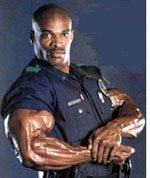
After the workout, we watch as Ronnie gets ready for work as a police officer with the Arlington, Texas police department. The sight of the 285 pound Mr. Olympia as he arrives at a domestic disturbance is hilarious. Having Ronnie arrive at your door has to be quite a sobering experience.


Coleman's dedication is evident as he works his training and diet around his work schedule. He is on the treadmill for an hour when he wakes up at 7am and then again when he gets home from a long day at work at midnight. In between, he can be seen eating his home-cooked chicken in the squad car as he attempts to get his meals in on time.

The second workout on the tape is an incredible back training session. Beginning with Deadlifts, Ronnie warms up with several sets before displaying world-class powerlifting strength as he pulls a gargantuan 805 pounds off the floor for 2 reps! Has this ever been done by a bodybuilder before, let alone 5 weeks out from a contest?? Barbell Rows with 495 pounds are performed next with relative ease considering they are done after the Deadlifts. Wait, he's not finished yet! Rows with the end of the barbell in the corner finish the workout. We watch in amazement as he rams up 12 plates (540 pounds)for an amazing 9 reps! Ronnie delivers the most quotable line in the video as he states, "Everybody want to be a bodybuilder but don't nobody want to lift no heavy ass weights!"

The next workout on the video is for chest and triceps. Everyone knows how strong Chris Cormier is in the gym. I recall watching the "Road to the Olympia 99" tape and being very impressed when Chris did 5 shaky reps with 200 pound dumbbells on the Dumbbell Bench Press exercise. You can imagine how amazed I was when Coleman manhandles the same weight for an easy 12 reps. I'm telling you, this guy is not human!

All of Coleman's workouts take place in the Metroplex Gym in his hometown. After seeing so many of bodybuilding's "superstars" with their support "teams" working out in some of the most glamorous gyms in the country, I was shocked to see Mr. Olympia himself training alone in a hard-core gym with NO support and NO help. Ronnie doesn't even have a training partner throughout the tape and he often has to call for gym owner Brian Dobson to come from behind the front desk to give him a spot. Of course, that doesn't stop him from performing some of the most mind-blowing workouts ever as he prepares to win another Olympia title.

The video concludes with a leg workout that has to be seen to be believed. A true proponent of basic exercises and heavy training, Ronnie demonstrates what intensity is all about as he begins with the Front Squat exercise. In what has to be some of the most incredible training footage ever filmed, Coleman pumps out reps in the Front Squat with 585 pounds! You will watch in amazement as the bar bends under the strain of the weight and Ronnie's head looks like it's going to pop off from the tension. After 4 reps, Ronnie drops the bar but comes back in the next set to pump out an easy 10 reps with a mere 495 pounds.

Super heavy Hack Squats are next and Ronnie wraps up the workout by doing Walking Barbell Lunges in the parking lot of the gym. Coleman looks like a modern-day Hercules as he toils under the hot summer sun walking the length of the parking lot with 185 pounds on his shoulders.

Even more amazing than Ronnie Coleman's strength and physique is his attitude and character. There is never a hint of self-pity or despair during this incredible display of superhuman workouts. Ronnie truly loves bodybuilding and I could not imagine him any happier than he is when he is lifting heavy weights and pumping up. Throughout the video, he routinely lets out exultations of "Light Weight!" and "Yeah buddy!" as he psychs up to lift these incredible poundages.

The video concludes with Ronnie's tribute to gym owner Brian Dobson. He touchingly refers to Dobson as his own personal "angel". Ronnie states that he believes everyone has a purpose in life and his purpose was to be Mr. Olympia. When Brian Dobson approached Ronnie in 1989 and offered him a free gym membership if he would enter a bodybuilding contest, he set into motion a series of events that have culminated with Ronnie Coleman as 3 time Mr. Olympia winner and one of the biggest and most intense bodybuilders on the planet. We should all be thankful!
This is what Ronnie Coleman himself had to say about my review of the video.


Wow John that was one incredible review, it brought tears to my eyes, I'm surely gonna frame it when it comes out in the Magazine. Thanks a whole lot bro, I really and truly do appreciate that you appreciate the hard work and dedication that went into making that video. I did have a lot of fun making it and now I know it was well worth it from that review.

By Ronnie Coleman

http://naturalolympia.com/html/ColemanVideoReview.html

Ronnie Coleman’s top 10 sayings


Ronnie Coleman's Beliefs

Ronnie was born Ronald Dean Coleman on May 13, 1964 in Monroe, Louisiana. He currently lives in Arlington, Texas and has a degree in accounting. He has been a police officer since 1989 and is currently in the police reserves.

His contest weight is around 229 pounds, while his offseason weight is around 250. He met his girlfriend Vickie Gates, an IFBB pro bodybuilder, in 1992 at a GNC store (Ronnie what the heck are you doing at a GNC!?!) Heh heh.

If you don’t already know by now, Ronnie is THE eight-time Mr. Olympia title winner and is regarded as the current leading jockey of the sport, and has won the Mr. Olympia contest every year from 1998 to 2005.

Though Ronnie’s physique is something I have no intention in obtaining (I’m just an average guy), I do find his principles and training methods to be inspiring. Below are Ronnie’s top 10 mottoes, taken from Flex Magazine, Feb 2005. No. 3 is my favourite.

1.“I’m just normal.”

2.“There ain’t no secrets.”


3.“Shake them haters off.”


4.“This ain’t nothin’ to me.”


5.“Train harder and grow bigger.”

6.“Different things work for different people.”


7.“Light weight!”


8.“Ain’t nothin’ but a peanut.”

9“It’s all just apples and oranges.”


10.“Everybody wants to be a bodybuilder, but don’t nobody want to lift no heavy-ass weights.”

By Flex Magazine, Feb 2005 Issue

http://www.dailymuscle.com/

Adding Mass By Ronnie Coleman


How to Add Quality Mass To Your Frame?

Over the years I have received numerous questions about how to add mass to one's frame. To put on mass can be a painstaking task for some. I have found that the following things can help a great deal with adding mass to the frame.
a.
Eat, eat and eat some more
b.
To add strength and mass, try to consume four to six meals a day. Choose from a variety of food groups at mealtime. Try to include lots of potatoes, rice, pasta, fruits and vegetables
c.
Make sure you are eating enough. A low fat diet and avoiding refined foods are good, but it won't help you build mass. On the same note you don't want to eat a high fat diet all the time. Fat provides additional calories, the fat-souluble vitamins A, D, E and K and raw materials for important hormones that stimulate muscle growth.
d.
Monitor the amount of mass you are gaining. Measure your body parts and weigh every week to see if you are going in the right direction.
e.
Lastly, continue to train hard. And remember gaining mass won't happen overnight.


By Ronnie Coleman

http://www.bigroncoleman.com/Pages/Nutrition.html

Ronnie Coleman's Interview


Exclusive Interview By John Stamatopoulos With Ronnie Coleman

March 6th, 2001 - Hello once again friends. Today I have the honor of interviewing the best of the best! He is "simply the best" that bodybuilding can offer today. He wrote history in 1998 when he won the Mr. Olympia, even though the previous year he was just 9th! (He became the first Mr. Olympia that came from so far behind.)

He recently wrote history again, when he became the first bodybuilder to win the Mr. Olympia and the Arnold classic in the same year! For all the people that love this sport he is undoubtedly "number 1" in our eyes. For baskeball fans their favorite is Michael Jordan. For tennis fans their favorite is Andre Agassi. But for bodybuilding fans his name is RONNIE COLEMAN!

Ronnie was introduced to competitive bodybuilding by Brian Dobson, the owner of the Metro Flex Gym in Arlington. He won the heavyweight and overall title in his first bodybuilding contest, Mr. Texas, in April 1990. Ronnie graduated from Grambling State College with a degree in Accounting.

He recently ended his 12-year police career, in order to not miss opportunities to compete and fly to bodybuilding appearances. He will remain a reserve officer with the department, working two days a month.

RONNIE COLEMAN'S INTERVIEW!

1. Q. Ronnie, the biggest dream of a competitive bodybuilder is to win the Mr. Olympia title, and that's something that you have already done 3 consecutive times. Now, since you are just the 10th person in Mr. Olympia history to fulfill this dream, is there something that you still want to accomplish? Maybe to break Lee Haney's record?

R.C. I just want to be the best bodybuilder that I can be as long as I can be. If it includes breaking Lee Haney's record then that is something I would cherish more than anything in the world.

2. Q. You will compete in the Arnold Classic in a few days. If you win, you will be the first bodybuilder in history to take 1st place in both, the Mr.Olympia and the the Arnold Classic. What was the reason for this kind of decision? Was it to accomplish something that no ex-Mr. Olympia has done in the past, or is it something else? (This interview was taken few days before the Arnold Classic. He Won!)

R.C. Yes that is the main reason why I'm doing this, I'm also trying to bring as much publicity to bodybuilding as I can. I want this sport to be more recognized than it currently is recognized. I too would love to get more recognition as the world's greatest bodybuilder and be someone to look up to as a role model for young kids.

3. Q. A Mr. Olympia should train very hard, eat many times per day, recuperate adequately, and use cutting edge supplements. What supplements do you currently trust and use?

R.C. I use a variety of Weider supplements, I take Zinc, Magnesium, Multimineral and all of these are by the Schiff line. I take ZMA, Vitamin C-1000mg. Vitamin E-400IU, Weider Dynamic Muscle Builder, Creatine ATP by Weider, American Bodybuilding Turbo Tea, Speed Stack and my favorite to take everyday is Pain Free by Schiff recently named Move Free.

4. Q. Let's turn back the time and go to the year 1992. In your first Mr. Olympia that was held in Helsinki, you got just 16th place. My question is how easy or how difficult was it for you at that time to believe that you will get the Mr. Olympia some time in the future?

R.C. I never in a million years believed I would become Mr. Olympia. I was just competing to have fun and that was my only intentions back then. But if the oppurtunity came for me to make money, I would be more than happy to do that, but I never cared about becoming Mr. Olympia because I didn't think I had what it took to become Mr. Olympia.

5. Q. This is my last question for you Ronnie, and it's quite "hypothetical" but I believe it is a good one. Let's say that it would be possible to have a bodybuilding contest where the only competitors would be you, Arnold Schwarzenegger, Lee Haney, and Dorian Yates, and all of you in their prime condition. Who do you believe would win?

R.C. Come on now, this is the age of Ronnie Coleman who else would win... but I couldn't have beat them in their hey days.

By John Stamatopoulos

http://www.bodybuilding.com/fun/rcinter.htm

Thursday, April 13, 2006

Packing Size On Delts By Ronnie Coleman


ASK MR. O.

I can't get my front delts to grow. Should I concentrate on front raises to pack some size onto my shoulders?

Massive front delts do not come solely from your shoulder workout; they come also as a result of your chest workout. That may surprise you, since your front delts are part of your shoulder complex. However, your anterior deltoid heads, which are your front delts, work at 90 degrees from your lateral deltoid heads, so their function is totally different from other muscles in your deltoid group.

The fact that one muscle group benefits from the workout of another should come as no shock. For nearly every exercise you do, you can feel ancillary and stabilising muscles from remote areas coming to the aid of the target muscles. You need to understand this concept as it applies to your front delts. For instance, front dumbbell raises have a purpose, but not as a mass-building exercise. They isolate the front heads, so you can burn in striations and make them stand out distinctly from the lateral heads and other muscles in the area. To make the front heads bigger, rounder and fuller, you need to train them with a movement that applies more compound power.

Start your shoulder workout with heavy presses of some sort and bump front dumbbell raises to number three or four in your exercise order. You will still receive full benefit from the front raises, but they will no longer sap your shoulder strength from the more important mass builders.

To prioritise anterior deltoid head mass, see the training split and workouts I recommend. Stick to this programme for a couple of months, use good form and the gains will come.


By Ronnie Coleman

http://www.siteeditor.co.uk/flex_oz/238.html

Ronnie Coleman's Training


Secrets Of Ronnie Coleman's Training

For breakfast, Ronnie Coleman ate big
Grits
Two cups of egg whites from eggology
One slice of processed cheese for flavour (all of these items were mixed in a bowl.
Cup of coffee. From there, he headed off to his first workout, in Metroflex Gym in Arlington. This gym really looked hardcore. It was reminiscent of
Dorian Yate's Temple gym in England. All the weights and plates looked old and well used, the temperature was sky high, and there were bags of dog food scattered all around. Wow! Talk about a gym. Day 1: Calves / Shoulders Calves: Ronnie is often criticized for having calves which are too small. If you agree with this statement, after watching this video, you may leave with a different opinion. Ronnie's calves are most certainly large - probably some of the largest in bodybuilding history. I would say easily in the top 10 for sheer size. The reason why Ronnie's calves look small is because his thighs are so monstrous. His calves may not have that classic diamond shape of rival Jay Cutler, but they are huge nevertheless. Here are the exercises and weights Ronnie used for his workout:
Seated Calf Raises - 4 plates / 5 plates / 6 plates
Leg Press Calf Raises - Lots of plates on this one! What some of you may or may not know is that Ronnie Coleman is a devoutly religious man. After his calves workout, the owner of Metroflex gym, his training partner, and Ronnie, all said a prayer, hoping for a victory at the 2003 Mr. Olympia contest. Then Ronnie went on to his shoulders routine for the day. Here are his exercises and weights:
Dumbbell Shoulder Presses: 65, 120, 140, 160 pound dumbbells. He managed to get his heaviest set (320 pounds total) for 6 reps. Ronnie is amazingly strong!
Machine Side Raises: Warmup, followed by two sets superset with machine shoulder presses.
Front Raises: 40, 50, 60 pound dumbbells.
Cable Crossovers for delts: Four sets.
Barbell Shrugs (behind the back) for four sets. For those of you familiar with
Lee Haney's bodybuilding video produced in the late 1980s, you may remember that Lee was a big advocate of behind the back barbell shrugs as opposed to barbell shrugs to the front. Lee's reasoning was simple: Your traps are situated on your back, so working them from the back makes the most sense. Ronnie's workout lasted a total of 1 hour and 23 minutes. The time was now a little after 2PM, and Ronnie was off to the Black Eyed Peas for his second meal of day
Chicken breast
Corn
Beans
Cornbread
Glass of water And Ronnie wasn't done his workout for the day quite yet. He then went to his home gym to do cardio on the stairmaster. It was 100 degrees in his home gym and Ronnie did the stairmaster as he watched TV. Next was his 6PM meal at the Black eyed peas. He had the same meal he did at 2PM. Next was his 10PM meal (#4 for the day) at the Outback Steak House:
Baked Potato
Fries
Steak Thursday, August 7, 2003: Ronnie started the day early at around 9:30AM and ate the same breakfast he did the day before. But now we get to see some of Ronnie's vitamin supplementation. Wow! Talk about a big list:
Vitamin E
CQ10
Chromium
Multivitamin
Vitamin C
Celebrex
St. Joseph
Aspirin 81 mg
Calcium
ZMA
Variety blend of Omega 3
Prostate tablet
Leutine tablet for eyes
Liver tablet
DHEA
Energy Pills
Multivitamin Next Ronnie spent some time signing photos from FLEX magazine or from orders off his website. He had dozens of photos to sign. Next Ronnie waso off to the gym again. There were slight audio problems in the car due to Ronnie's loud car stereo playing "Gangsta Party". Day 2: Quads / Hamstrings


Quads:
Leg Extensions - Ronnie did five sets, increasing the weight each time. On his final set, he was doing the full stack plus some extra weight he threw on.
Deep Squats - Ronnie started off with 225 pounds, then went up to 405, and 495, which to Ronnie was "nothing but a peanut". On his fourth set, the real weight started - he did 745 pounds for four reps, followed by the biggest set - 800 pound squats for two deep reps. He used wraps for his knees, and an Inzer advanced design power suit, and a belt for safety.
Leg Press - the heavy weight wasn't over yet! Ronnie started off with 1350 on the leg press, then did 1710 for 12 reps, followed by 2070 for 10! Being sure to have his knees wrapped and wearing a belt, Ronnie did 2250 for eight reps (50 plates in total!). It may have even been more than 2250 pounds if you factor in the weight of the leg press sled.


Hamstrings:
Single Leg Curls for four sets.
Straight Legged Deadlifts - 225, 225, 275 pounds. Then at 3:15PM, he was off to the Black Eyed Peas for his second meal of the day, which was the same as he had at the Black Eyed Peas before. Once again, after his second meal, he went home to do some cardio on the stairmaster in the 100 degree heat. Meal three of the day was also at the Black Eyed Peas, and once again, was the same as before. Next, the DVD showed Ronnie at his massage therapist - Angela, whose qualifications were EYSERY, RMT, LPTA, CWT, STS. She massages Ronnie once weekly at his home and had been doing so for the past two years when this video was filmed (in 2003). She was a physical therapist assistant by trade and noted that Ronnie was her biggest client, and that every now and then, Ronnie would bring in other bodybuilding friends to get massaged by her, but that normally she doesn't see people of Big Ron's size. This was followed by meal four for the day, once again at the Outback Steakhouse. Day 3 - Abs / Chest / Triceps Ronnie started off this day the same as the previous ones - with his big egg white and grits breakfast, followed by his collection of vitamins. Then went off to the gym for a workout. Abs / Chest / Triceps:


Abs:
Crunches (One Arm) on Bench (Warmup)
Two Arm Crunches on Bench.
Butterfly Crunches.
Cable Crunches
One Arm Crunches on Bench
Butterfly Crunches X Two sets
One Arm Crunch on Bench
Two Arm Crunch on Bench
Butterfly Crunch
Cable Crunch. Ronnie may not have the best abs in the world, but it is not due to a lack of training or dieting correctly. The shape of Ronnie's abs are genetic (same as how the shape of your abs are genetic), but he most certainly works them out as hard as any other part. Here is a picture which shows that Ronnie definitely has good abs in some poses:


Chest: Next Ronnie was out to hammer his chest. Wearing gloves and using chalk, Ronnie hit the flat bench presses to start:
Flat Bench Presses - 135, 225, 315, 405, 495 for five reps on his heaviest set.
Incline Bench Presses - 225, 315, 405 for nine reps on his heaviest set.
Decline Bench Presses - 225, 315, 405 for 10 reps on his heaviest set.


Triceps:
Triceps Dumbbell Extensions for three sets using 75 pounds for 15 reps.
Dips Machine for three sets.
Ticeps Pressdowns for three reps (going up to 140 pounds in weight). At 3PM, Ronnie trecked down to the Black Eyed Peas once again, for his second meal of the day - which was the same as usual. Then back to his home gym for cardio on the stairmaster in 90 degree heat. At 6:40PM, Ronnie headed to the Black Eyed Peas again for his third meal of the day, and at 10:30PM he headed to the Outback Steakhouse for meal four. Saturday, August 9, 2003 Day 4 - Ronnie's Home Gym Workout


Calves
Donkey Calf Raises (Machine) - Three sets.
Machine Calf Raises - Three sets.
Seated Calf Raises - Five plates for Three sets. Like I said, no matter what you say about Ronnie's calves, they are huge! Sure, they may not have the classic shape of
Jay Cutler's calves, but they are huge, nevertheless. For the next workout, Ronnie went back to Brian Dobson's Metroflex gym to work back and biceps. Day 5 - Back / Biceps:

Back:
Lat Pulldowns - Four sets using the whole stack and extra weight for the last set.
Behind the Nexk Pulldowns - Three Sets.
Cable Rows - Three Sets using the whole stack and two additional plates.
Dumbbell Pullovers - Three sets using a 160 pound dumbbell.


Biceps:
Machine Curls - Three sets using the full stack.
Alternate Standing Dumbbell Curls - Three sets (75 pound dumbbells).
Machine Curls - Three sets. Ronnie followed this up with posing in Metroflex gym. He did the following poses:
Front Double Biceps.
Front Lat Spread.
Side Chest.
Side Serratus.
Most Muscular.
Side Triceps.
Crab Most Muscular.
Rear Lat Spread
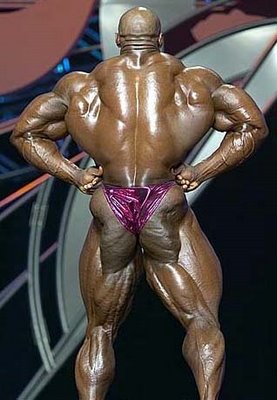
Back Double Biceps. And let me tell you - Ronnie was HUGE! He had muscle in places most people don't have muscle - he had muscle in places most people don't have PLACES! He looked like an alien! Here is a photo from
www.flexonline.com of Ronnie Coleman's HUGE back from the 2003 Mr. Olympia contest:

By bodybuildingpro.com

http://www.bodybuildingpro.com/

Biography of Ronnie Coleman


Biography

Birthdate: May 13, 1964Birthplace: Monroe, LouisiannaEducation: Bastrop High School 1982; Grambling State University, 1986 (BS in Accounting, Cum Laude)Children: Jamilleah DanielsOccupation: Reserve Police Officer for the Arlington Police DepartmentHeight: 5'11"Weight: 280 lbs. (contest); 315 lbs. (off-season)Current residence: Arlington, TX

Ronnie was born Ronald Dean Coleman on May 13, 1964 in Monroe, Louisiana. He currently resides in Arlington, Texas. He graduated from Grambling State College with a degree in accounting. He is currently a reserve police officer for the Arlington Police Department. He has been on the force since 1989.


Ronnie was introduced to competitive bodybuilding by Brian Dobson, the owner of Metro Flex Gym in Arlington. He won the heavyweight and overall title at his first bodybuilding contest, the Mr. Texas in April 1990. And the rest, as they say, is history...

Ronald Coleman is an American bodybuilder and a eight-time Mr. Olympia, beating Arnold Schwarzenegger and tying all time - behind Lee Haney. He is known mainly as "Ronnie Coleman", and is regarded as the current leading champion of the sport, and has won the Mr. Olympia contest every year from 1998 to 2005. He used to work as a police officer in Texas, but recently he has given up the job to focus on bodybuilding full time.

He is well-known for his humorous sayings like, "Aint nuttin' but a peanut" and has been widely-applauded for his sense of humor and affection toward his fans. He is also known for his work ethic and intense dedication to the sport of bodybuilding. He is one of the strongest bodybuilders on the professional circuit, being able to deadlift over 800 lb (363 kg) and squat nearly 900 lb (408 kg).

Current Stats Height: 5 ft 11 in (1.80 m) Weight: 296 lb (134 kg) (contest) 330 lb (150 kg) (off-season) Arms: 26 in (660 mm) Chest: 66 in (1676 mm) Legs: 37 in (940 mm) Bodybuilding Titles
1990 Mr. Texas (Heavyweight & Overall)
1991 IFBB World Amateur Championships (Heavyweight)
1997 IFBB Grand Prix Russia
1998 Mr. Olympia
1999 Mr. Olympia
1999 Joe Weider's Pro World
1999 IFBB Grand Prix England
2000 Mr. Olympia
2000 IFBB Grand Prix England
2000 Joe Weider's Pro World
2001 Arnold Schwarzenegger Classic
2001 Mr. Olympia
2001 New Zealand Grand Prix
2002 Mr. Olympia
2002 Grand Prix Holland
2003 Mr. Olympia
2003 Russian Grand Prix
2004 Mr. Olympia

2005 Mr. Olympia

By bodybuildingpro.com

http://www.bodybuildingpro.com/ronniecolemanbio.html#1

Tuesday, April 11, 2006

Warren Buffett Wants You To Know


What Warren Buffett wants you to know

How do you learn from a master? Start by listening to what he has to say.May 3, 2004: 2:58 PM EDT By Jason Zweig, MONEY magazine
OMAHA (CNN/Money) - Editor's note: The Berkshire Hathaway annual meeting attracted nearly 20,000 attendees this past weekend. With elements of an investing seminar, a revival meeting and a carnival, the event has become a ritual.


MONEY magazine's Jason Zweig covered the meeting for CNN/Money. He culled the following highlights out of lengthy Q&A sessions between Berkshire shareholders and Warren Buffett & Charles Munger, the firm's top managers.

Because audio and video recording was prohibited, what follows is not necessarily a verbatim transcript of their responses. It is, however, a close approximation based on Zweig's manual transcription of the multi-hour sessions.

Calpers pressure

The first question from the floor asked whether, under pressure from institutional investors like the California Public Employees Retirement System, Buffett was considering stepping down from the board of Coca-Cola. "Whoever suggests that," shot back Buffett, "should do 500 situps."

"I think it was Bertrand Russell who said most men would rather die than think," he said. "We have $10 billion [BRK's stake in KO] riding on that side of the table. I encourage institutional shareholders to behave like owners, but I also encourage them to think logically as owners should in determing what causes they should take on."
Munger, as usual, was more succinct: "The cause of reform is hurt, not helped, when an activist makes an idiotic suggestion."


Executive compensation

Buffett and Munger both were scathing on the subject of executive compensation and the process of how pay is set at major corporations:

"The typical large company has a compensation committee," said Buffett. "They don't look for Dobermans on that committee, they look for chihuahuas."

He paused amid laughter, then added: "Chihuahuas that have been sedated."
Munger interjected: "I would rather throw a viper down my shirtfront than hire a compensation consultant."


On Bill Gates and succession

From the floor, a shareholder wanted to know if Buffett would consider asking Bill Gates to succeed him as Berkshire chairman. With a laugh, Buffett asked: "Did Bill put you up to this?"
He added: "Bill could do my job very well, although I couldn't do his! But we've got four people who could do my job maybe better than I can. We're well equipped."


After a pause, Buffett added: "I don't think [Gates] is really looking for my job, although he may salivate at the pay level." (Buffett's cash compensation was $100,000 in 2003.)

On stock options

Already up on the soapbox, Buffett and Munger went straight into a denunciation of everyone who opposes treating stock options as an expense. To Berkshire's bosses, it is not just a technical accounting question, but a matter of fundamental morality.

"Write your congresspeople giving them your views on whether options should be expensed," said Buffett. "It was a disgrace 10 years ago when Congress bludgeoned the SEC and the [Financial] Accounting Standards Board to override FASB's decision to expense options. It accelerated the anything-goes mentality of the 1990s."

Buffett then told the crowd a story about a 19th-century bill in the state of Indiana that sought to "change" the value of pi.

"It seems there was a fellow who discovered some new relationship between circumference and diameter that would help students learn a better kind of geometry, so he wrote a law to change the value of pi from 3.14159 etc. to 3.20. It passed the Indiana house -- until the Indiana senate finally thought better of it."

After the audience stopped laughing, Buffett came to his point about options, "The U.S. Senate concluded that the world was flat, because their their contributors paid them enough to say the world was flat."

Then Munger weighed in: "It's worse than that. Those people who wanted to round pi to 3.2 were stupid. These people [the opponents of expensing options] are worse than stupid. They know it's wrong and want to do it anyway."

Worst mistake

When a shareholder asked for Buffett's worst mistake in recent years, he answered: Wal-Mart.
"I set out to buy $100 million shares of Wal-Mart at a [pre-split price of] $23," recalled Buffett. "We bought a little and it moved up a little and I thought maybe it will come back a bit. That thumbsucking has cost us in the current area of $10 billion."


Mutual funds

Buffett and Munger reserved some of their most withering scorn for the mutual fund industry.
When a shareholder asked how they would recommend selecting a professional investment manager, Berkshire's boss opened the bomb bays: "One thing I can almost guarantee you is that the promotional types are very unlikely to meet any long-term tests of ability and sometimes integrity."


Then Munger weighed in: "Mutual funds took bribes for the proposition of betraying their shareholders. It was like someone coming to you and saying, "Why don't I kill your mother and we'll split the insurance money?"

Dividends

A shareholder asked what it would take for Berkshire to change its longstanding opposition to paying a dividend or conducting share repurchases. Buffett used the question to teach a mini-clinic on corporate finance, pointing out that the managers of a company have a fiduciary duty to put the company's cash to optimal use.

"When a stock can be bought well below its business value, that is probably the best use of cash," he said. "Stock repurchases have become very popular now, but I think it's often done by people who are hoping it will cause their stock price not to go down."

The implication: Companies that buy back their stock merely to counteract the dilution caused by the exercise of stock options by insiders are misusing the shareholders' assets.
Later, Buffett made a striking observation. Imagine that Berkshire decided that it could no longer wisely invest its $30 billion-plus worth of cash and decided to distribute all that cash to shareholders in a special dividend. Buffett himself, as the largest shareholder, would get more than $7 billion.


Then, he pointed out, he would have to try to find good investment opportunities to put all that money to work for his own account. "I would be in competition with Berkshire's shareholders, and I don't think that would be good for them," Buffett said.

On Google

Buffett and Munger had high praise for Google. Not only is Buffett an enthusiastic user of the search engine, but he and Munger admire the style of Google bosses Larry Page and Sergey Brin.

"I'm very pleased that the Google fellas decided that it's a good idea to talk to their prospective owners in a very straightforward manner"

"I think you'll know what they will do and won't do," said Buffett, in discussing Google's prospectus. "More companies ought to do that."

As Munger put it, "Those two guys are two of the smartest young men in the country, and it's much better to be copied by people that smart."

Later, Buffett indicated that Page and Brin -- through a mutual friend -- had e-mailed an advance copy of the document to Buffett to make sure it was "OK with me."
Buffett's reply: "I said it was fine, although I thought a royalty was appropriate."


Whole foods

Don't look for Berkshire to buy a stake in Whole Foods any time soon.
When a Berkshire shareholder from the Bay Area asked if Buffett and Munger had ever considered investing in Whole Foods, Munger barked: "My idea of a good place to shop is Costco [where Munger is a director]. Costco has these heavily marbled steaks and the idea of eating some whole-grain whatever and washing it down with some carrot juice has never appealed to me."


Troubled times

When a shareholder asked whether Buffett and Munger were worried by the big picture -- the war in Iraq, higher interest rates and such -- Buffett had a ready answer:

"At any given point in history, including when stocks were at their cheapest, you could find an equally impressive number of negative factors. In 1974 you could have written down all sorts of things that could have led you to think the future would be terrible," he said.

"We really don't pay any attention to that sort of thing," he added. "Our underlying premise is that this country will do very well, and it will do very well for businesses."

In euphoric times like 1999, Buffett explained, people invest as if they are "living in a fool's paradise" and end up losing money on stocks even though business as a whole remains profitable. "American business really has never let investors down," he said. "But investors have done themselves in quite frequently."

On life

As always, many of the questions from shareholders had little to do with investing. A 14-year-old from California, Justin Fong, asked what advice Buffett and Munger would give a young person on how to be successful.

"It's better to hang out with people better than you," said Buffett. "Pick out associates whose behavior is better than yours and you'll drift in that direction."

Added Munger drily, "If this gives you a little temporary unpopularity with your peer group, the hell with 'em."

Press conference

At a Sunday press conference, Buffett and Munger held forth for another two-and-a-half hours in front of roughly 50 journalists from as far away as Australia and South Korea.

After talking almost non-stop for two entire days, Buffett's voice was beginning to wear thin, but he and Munger had lost none of their Abbott and Costello routine. Buffett played the clever smoothie who speaks in paragraphs and Munger assumed the role of a taciturn cynic whose favorite words are "stupid," "crazy," "bonkers" and "nuts."

When a TV reporter asked if Buffett and Munger had a favorite -- or least favorite -- industry sector, Buffett expatiated patiently on their method of picking securities: "We don't say, 'We like this industry and therefore we'll try to buy a stock in it.'"

When Buffett paused for breath, Munger drawled: "Warren, isn't it fair to say that if we did have an opinion, we wouldn't tell him?"

"Yes," said Buffett, "but we don't have an opinion." Turning the reporter, Buffett delivered the coup de grace: "So you lose twice."

A roomful of journalists could not resist asking about the prospects for newspaper stocks. Buffett and Munger were surprisingly bearish on newspapers, a major investment for Berkshire through its large stake in the Washington Post Co. and its outright ownership of the Buffalo News.

After saying that he and Munger are "newspaper addicts" and that "it's still an unusually good business," Buffett struck a somber note.

"The economics of newspapers are very, very close to certain to deteriorate over the next 10-20 years," he warned. "I see nothing that will turn around the erosion from both the circulation and advertising standpoints."

As a personal aside, Buffett reported that "if I couldn't have done what I do now, I would have enjoyed being a financial journalist."

The thought was simultaneously flattering and humbling to every reporter in the room.

By money.cnn.com

http://money.cnn.com/2004/05/03/pf/buffett_qanda/

Message From Warren Buffett


A Message From Warren E. Buffett, CEO of Berkshire Hathaway Inc.

Dear Reader,

You probably know that I don't make stock recommendations. However, I have three thoughts regarding your personal expenditures that can save you real money. I'm suggesting that you call on the services of three subsidiaries of Berkshire: GEICO, Borsheim's and Berkshire Hathaway Life Insurance Company of Nebraska (BHLN).

I estimate that about 40% of all auto drivers in the country can save money by insuring with GEICO. The figure is not 100% because insurers differ in their underwriting judgments, with some favoring drivers who live in certain geographical areas and work in certain occupations more than GEICO does. I believe, however, that GEICO more frequently offers the low price than does any other national carrier selling insurance to all comers. You can quickly find out whether you can save money by going to www.geico.com or by calling 800-555-2756.

Fine jewelry, watches and giftware will almost certainly cost you less at Borsheim's. I've looked at the figures for all publicly-owned jewelry companies and the contrast with Borsheim's is startling. Our one-store operation, with its huge volume, enables us to operate with costs that are fully 15-20 percentage points below those incurred by our competitors. We pass the benefits of this low-cost structure along to our customers.

Every year Borsheim's sends out thousands of selections to customers who want a long-distance opportunity to inspect what it offers and decide which, if any, item they'd like to purchase. We do a huge amount of business in this low-key way, which allows the shopper to conveniently see the exceptional values that we offer. Call Scot Caniglia or Susan Jacques at Borsheim's (800-642-4438) and save substantial money on your next purchase of jewelry.

Finally, BHLN sells annuity products directly over the internet at its website www.brkdirect.com. Like GEICO and Borsheim's, BHLN maintains a low cost structure and, thus, can offer savings to many customers. By visiting the web-site, you can evaluate the specific products, get quotes and actually make a purchase. Check to see whether one or more of the products meet your financial planning needs.

Sincerely,
Warren E. Buffett


By berkshirehathaway.com

http://www.berkshirehathaway.com/message.html

Investment Principles Of Warren Buffett


Warren Buffett's Investment Principles

Warren Buffett does not readily disclose the investments he makes on behalf of himself or Berkshire Hathaway. He does, every year, report on the substantial holdings of his company in other corporations. These provide only tiny clues however to why, when and where he invests.
He is prepared, however, and does so regularly, to outline general principles of sound investment. These have a consistent theme and can be summed up like this.


Stock investments should be looked at in the same way as buying a business. The stock investor is really buying a tiny share or partnership and should apply the same principles that they would in buying a business – the Benjamin Graham approach:

1. The company should be soundly managed. Tests of good management include:
Share buybacks
Good use of retained earnings
Sticking to what you know

2. The company has demonstrated earning capacity with a likelihood that this will continue. Tests of earning capacity include:
Company growth
Dealing with inflation
Capital expenditure
Look through earnings
Brand names

3. The company should have consistently high returns. Warren Buffett would look at both:
Returns on equity
Returns on capital


4. The company should have a prudent approach to debt.

5. The businesses of the company should be simple and the investor should have an understanding of the company.
See
case studies

6. Assuming that all these thresholds are satisfied, the investment should only be made at a reasonable price, with a margin of safety. This is always a matter for independent judgment by the investor but it is relevant to consider:
Price/earnings ratios
Earnings and Dividend yields
Book value
Comparative rates of return


7. Investors need to take a long term approach.

By buffettsecrets.com

http://www.buffettsecrets.com/

2nd Richest Man In The World - Warren Buffett


#2 Warren Edward Buffett

Net Worth: $40.0 billion
Source:
Investments, Berkshire Hathaway
Self made

Age: 75
Marital Status: Widowed, 3 children
Hometown: Omaha, NE
Education: University of Nebraska Lincoln, Bachelor of Arts / Science
Columbia University, Master of Science

Revered investor taking it on the chin over Berkshire Hathaway's General Re insurance unit; SEC threatening civil fraud suit against General Re Chief Joseph Brandon over questionable transaction with American International Group. Also getting it for his board seat at Coca-Cola, where his "independence" might be compromised by Berkshire's ownership of Dairy Queen, which buys lots of Coke products. Buffett: "Do they want us to favor Pepsi?" At Berkshire set in place two governance reforms: regular meetings of directors without Buffett present; whistleblower line for employees. Sitting on $43 billion in cash, hoped to make some big acquisitions last year, "but I struck out." Instead, invested in foreign currencies: $21 billion bet against the dollar and in favor of various other currencies. "In no way does our thinking about currencies rest on doubts about America." Newspaper delivery boy filed first 1040 at age 13; claimed $35 deduction for bicycle. Studied under Benjamin Graham at Columbia. Applied value-investing principles to build Berkshire Hathaway. Portfolio includes utilities (MidAmerican Energy Holdings), insurance (Geico, General Re), apparel (Fruit of the Loom), flight services (FlightSafety, NetJets). Also chunks of American Express, Coca-Cola, Gillette, Wells Fargo. Instructs managers to run a business as if it's the only asset the manager's family will own over the next 100 years. Prefers his investors to buy equities only after careful analysis. "If they insist on trying to time their participation in equities, they should try to be fearful when others are greedy and greedy only when others are fearful." Says he underestimated the severity of certain stocks' overvaluation during the tech bubble. "I talked when I should have walked." No matter. Since taking control of Berkshire 40 years ago, has delivered compound annual return of 22%. "No wonder we tap-dance to work."

By forbes.com

http://www.forbes.com/

Short Biography Of Warren Buffett


Warren Buffett

Warren Edward Buffett was born in Omaha in 1930.

Warren Buffett's father, Howard was a stockbroker and Republican congressman. When he was just 11, Warren Buffett bought his first stock - three shares of Cities Service Preferred. The price initally dropped but Buffett held and sold at a small profit. However, he did not put into play what was to become a hallmark of his investment strategy - patience. After Warren Buffett sold the stock, the price rose eventually from $40 to $200 a share.

After graduating from the University of Nebraska, Warren Buffett was rejected by the Harvard Business School and went to study at the Columbia University Business School with Ben Graham, author of Security Analysis.

According to Graham the way to treat the market was like it was a manic-depressive. When it's manic sell to it, when it's depressed offer to buy from it.

In 1957, Warren Buffett returned to Omaha and started his first investment partnership. His painstaking research started to pay off. He stayed in Omaha, which is emblematic of his preference for his original shareholders over meetings with analysts.

Buffett adapted Graham's approach. Whereas the latter took a pure statistical approach, Buffett has said (according to Adam Smith's excellent book, The Roaring '80s): "Valuing a business is part art and part science..."

"The Oracle of Omaha" or "The Sage of Omaha" as Warren Buffett is known, has achieved an excellent long-term investment record, which has propelled him into Number 2 spot in the list of the world's richest men. His friend, Bill Gates, is Number One.

In May 2005, Berkshire Hathaway shareholders rubber-stamped the appointment of Bill Gates to their board. At the annual meeting Warren Buffett played the ukulele and told jokes. He also faced questions about a federal investigation into a reinsurance transaction between insurance company American International Group Inc. and Berkshire subsidiary General Re.

On March 11 2005, Forbes estimated Warren Buffett's wealth to be $44 billion. He and his wife, Susan were listed as the second largest charitable donors in 2004.

The Berkshire Hathaway letters to shareholders make interesting and informative reading. They are posted on the Berkshire Hathaway's website. They provide insight into Warren Buffett's life and his ideas.

Warren Buffett has said that only in the case of physical or mental incapacity would he consider retiring as chairman and chief executive officer of Berkshire. In which event Warren Buffett's eldest son, Howard, a Berkshire board member, would take over as chairman.

By biogs.com

http://www.biogs.com/famous/buffett.html

Wednesday, March 29, 2006

Refinancing Your Home Loan? When Should You Refinance Your Home?


What You Should Do When Refinancing Your Home Loan?

If you have a current mortgage and are unhappy with the interest rate or the amount of the monthly payments, it is possible to refinance your home and eliminate your problems. But before you call your lender, there are some questions that you should ask yourself in order to determine whether or not it’s the right time for refinancing your mortgage loan.

The first question that you should ask yourself is if you have the cash on hand to pay the fees. Depending on the amount of your mortgage, and the specific fees that your lender will charge, you could pay anywhere from a couple of hundreds dollars to a few thousand. Be sure that you’re financially ready for the move before applying for the loan.

Next, you should take a look at the current interest rates compared to the ones on your existing mortgage, and then decide whether or not a refinance would help your situation. For example, if you have an ARM mortgage, and the interest rates are at an all-time low, you might want to refinance your loan and turn it into a fixed rate so your payments won’t go up again as rates rise. In addition, if you have a fixed rate, but bought your home when interest rates were higher, you might want to refinance in order to lower yours.

If you find yourself with a lot extra debt, you could take advantage of a cash-out refinance loan. With this type of loan, you add on an amount to your home loan, refinance the entire thing at a lower interest rate, and then take the “extra” money out and pay off your debt. This will allow you to reduce the amount of debt you owe (because the interest rate will be lower), and at the same time, reduce the amount of the monthly payment.Most experts agree that you shouldn’t go to the trouble or expense of refinancing your home if you don’t intend to stay in it for at least three years. Otherwise the cost of the process would likely be more than the overall savings.

By Carrie Reeder

http://www.universalwealthcreation.com/

Wednesday, March 22, 2006

Information About The Newest Prescribed Prescription - Cialis


Cialis is the newest prescribed prescription for the condition known as ED (Erectile Dysfunction).

Uses

Cialis is in a class of medications known as PDE-5 inhibitors, which are used to treat cases of male impotence. Cialis is a fairly new impotence drug and has only just come onto the market. The UK is the first country in the world to be able to offer Cialis to its residents.

How to take this medication

Take CIALIS exactly as your doctor prescribes. CIALIS comes in different doses (5 mg, 10 mg, and 20 mg). For most men, the recommended starting dose is 10 mg. CIALIS should be taken no more than once a day. Some men can only take a low dose of CIALIS because of medical conditions or medicines they take. Your doctor will prescribe the dose that is right for you.

Side effects

The early tests seem to indicate that Cialis doesn't affect blood pressure as much as other ED drugs. The clinical trials showed that statistically there was no significant difference in cardiovascular side effects from the placebo.

Precautions

If you have kidney problems, your doctor may start you on a lower dose of CIALIS. If you have kidney or liver problems or you are taking certain medications, your doctor may limit your highest dose of CIALIS to 10 mg and may also limit you to one tablet in 48 hours (2 days) or one tablet in 72 hours (3 days).

Drug interactions

Consult your doctor about all nonprescription and prescription medication you may use, especially any nitrate medications (e.g., nitroglycerin, isosorbide dinitrate), nitroprusside (any "nitric oxide donor" medicines), cimetidine, erythromycin, azole antifungals (e.g., itraconazole, ketoconazole), mibefradil, rifamycins (e.g., rifampin) or high blood pressure medicines.

Notes

According to clinical studies data on Cialis(TM) (tadalafil), men with ED reported a statistically significant improvement in successful intercourse attempts at 24 and 36 hours after taking the drug, compared to placebo. Other new findings including a summary of cardiovascular safety data showed no increased incidence of cardiovascular events during clinical studies. In all studies, compared with placebo, use of Cialis® demonstrated consistent and statistically significant improvement and the treatment effect did not diminish over time.

Storage

Store at room temperature between 59 and 86 degrees F (15-30 degrees C) away from light and moisture. Keep it out of the reach of children.

By yourrxmed.com

http://www.yourrxmed.com/cialis.html

Wednesday, March 15, 2006

Control Your Blood Sugars Or Suffer The Side Effects


If I Don't Feel Sick, How Can High Blood Sugars Hurt Me?

I was told about all the problems my diabetes could cause, but nobody explained why. Had someone explained these things to me, I might have tried harder to do what I had been told to do. Complications from diabetes come on over time, and damage has often started before we realize something is wrong. The belief that "as long as I feel well I must be well" does not hold true for the complications of diabetes; they come on quietly.

GlucobeticNormalize Blood SugarCardiovascular System

The heart actually has the largest blood vessels in the body so why is it damaged? First of all, it is the job of the heart to pump the thick, sticky blood through all the narrowed vessels in the body. That is like canoeing in Jell-O compared with canoeing in water. The heart also has many small vessels that feed and nourish it. When blood sugars are high, they do not get the circulation they need. So not only are we asking the heart to work twice as hard, we are depriving it of nutrition to give it strength. Cardiovascular Disease is the most common cause of death in people with diabetes. But there are prevention and treatment strategies that have been proven effective.

Nerve Damage and Disease

Amputations and ulcers, especially in the feet, are more frequent in patients with poorly controlled diabetes. Decreased circulation to feet and legs leads to damage and loss of nerve function. The nerves lose their ability to sense pain, pressure, touch, or temperature correctly, which results in tingling and numbess of the feet and toes (fingers, too). This condition is called peripheral neuropathy.


Autonomic neuropathy occurs when there is nerve damage affecting the automatic processes in your body such as heart rate or sweating, so they do not work as they should. The stomach may not process food correctly. The heart rate or blood pressure does not speed up or slow down in response to exercise, exertion, rest, standing, or sitting. Autonomic neuropathy also contributes to the absence of chest pain with heart attack, and can cause sweating at inappropriate times or in specific areas, leaky bladder, pupils that do not constrict or dilate as needed, sexual dysfunction, and decreased ability to sense an infection or hypoglycemia.

Neuro-BeticPromote Nerve Health

If you already have numbness in your feet, is there any point to controlling blood sugars? Absolutely. Numbness and burning in the feet are signs that nerves have been damaged. Evidence has shown that nerves, when only damaged, can learn to trasmit messages through different pathways. If your feet are so completely numb that you cannot tell where they are because you cannot feel them, managing your blood sugars most likely will not get any sensation back. But it can prevent the numbness and nerve damage from spreading farther up your leg. And controlling your blood sugars will give your damanged nerves and your immune system a fighting chance to help your feet stay healthy.

Vision Problems

Retinopathy, macular edema, glaucoma, and cataracts are the more common eye disorders related to diabetes.

Eye disease is typically progressive, and there are usually no symptoms until damage has occurred. You may have 20/20 vision yet one day have complete vision loss due to a hemorrhage. This is the reason a yearly eye exam is so important. An eye doctor will be able to see the changes occurring before vision is at risk. Laser surgery can destroy the abnormal vessels in the eye and prevent their regrowth.

So What's The Good News?

Believe it or not, there is some good news. The whole process of long-term complications started with sticky red blood cells. The good news is that red blood cells only live two to three months. That means that in three months of keeping your blood sugar levels nearer to normal, you have a whole new set of unsticky red blood cells. This turnover eliminates the cops, slow cars, and semi-trucks from the freeway, and prevents further damage to the road. When blood sugar levels come down, the stickiness decreases on the walls of the arteries and veins, and triglycerides and cholesterol levels are reduced. So where lanes of traffic were closed, we now have open roads. Where damage has been done, we may not be able to repair it, but with improved control, we can prevent further complications and slow or stop the progress of any existing ones. Keeping blood sugars close to normal is the best way to prevent complications. Unlike genetics, age, or sex, it is the one component we have some control over.

By flourishwellness.com

http://www.flourishwellness.com/