


Tuesday, January 24, 2006

The Therapeutic Benefit Of High Quality Live Music For People


The therapeutic benefit of high quality live music for people confined to long-term care has long been widely recognised by healthcare professionals.

Who can benefit?

Children with acute, chronic or life-limiting illnessesChildren, from toddlers to teenagers, can respond to the soothing and distracting power of music. A Play Specialist at Edinburgh’s Royal Hospital for Sick Children, expresses her appreciation of the visits there by Music in Hospitals musicians"The music helps the children to communicate and reduces their anxiety while in hospital. They can choose their favourite songs and musical instruments and this empowers them and gives them back some sense of control.Most importantly the sessions are fun and normalise the very abnormal clinical environment of the hospital."

Hospice patientsThe concerts that take place in hospices and hospice units throughout Scotland aim to bring comfort and cheer to people of all ages with life-limiting illnesses. The hospice movement’s philosophy of enriching and enhancing the remaining days and hours of patients’ lives is complemented by the sensitive approach of musicians, and the emotional release that music can bring often helps supportive families and staff as well as patients.

People with learning disabilitiesPeople whose ability to learn may be limited can often have an appreciation of music and rhythm that is unimpaired. They will enjoy active participation and the effect of music can be both stimulating and calming. Musicians frequently find that audiences who are initially noisy and disruptive are quickly diverted and engaged once the concert begins.

People recovering from strokesTime and again staff record the extraordinary effect that live music can have on stroke victims. Doctors can provide a clinical explanation of why people who may be unable to speak can mouth the words of familiar songs, but it can still seem like a miracle for those who witness it for the first time. A clear therapeutic benefit can also be felt by people with impaired physical mobility who may be able to clap or tap in time to the music.

People with mental health problemsAn increasing number of concerts are now being arranged either in mental health units or in special day care centres. Some MiH musicians have considerable experience and expertise in performing for this category of client and visit certain units on a regular basis. A rapport based on friendship and trust is developed and can help to break down barriers.

Frail elderly people in long term careNumerous concerts are provided for older people in long-stay hospital units, care homes and day care centres. These audiences may include people who though frail are mentally alert, as well as some who are confused and agitated although physically fit. Long periods in institutional care can, in spite of the best efforts of dedicated staff, generate a sense of isolation, and the arrival of a cheerful group of musicians can enliven an otherwise dreary day. A spirited rendition of a familiar song can stimulate the remaining abilities of people suffering from dementia, and the warm and inclusive approach of the artists can help to restore a sense of normality.

By musicinhospitalsscotland.org.uk

http://www.musicinhospitalsscotland.org.uk/

New Watercress Recipe From Antony Worrall Thompson


Watercress Recipe

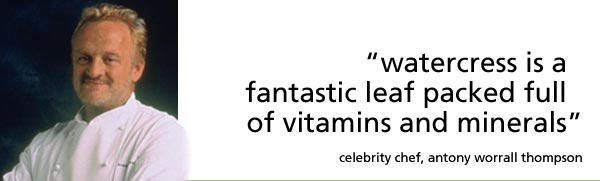
TV chef Antony Worrall Thompson is a huge fan of watercress, saying “Watercress is a fantastic leaf packed full of vitamins and minerals. It makes wonderful soup, is great in sandwiches and all sorts of things. It’s definitely come back into fashion because it’s so good for you.” One of only seven chefs to have been awarded the lifelong title of MOGB - the chef's Oscar - Antony became known for his success at the helm of several high profile establishments, among them Knightsbridge’s famous Menage a Trois, which is widely known to have been a favourite with Lady Diana. He is now increasingly in demand by broadcasters to comment on and discuss serious food issues such as diabetes, obesity, nutrition and the eating habits of children.

Grilled Buttery Chicken on a bed of Watercress Mash

Preparation time: 10 minutes
Cooking time: 30-35 minutes


Nutrition

portions:4
calories:471
fat:17.5g
saturated fat:8.5g
carbohydrate:30.6g
protein:49.6g
fibre:3.0g
salt:0.65g


Ingredients

For the watercress butter1 (85g) bag watercress, finely chopped
75g/ 3oz unsalted butter, softened
1 shallot, very finely chopped
5ml/1tsp English mustard

675g/11/2 lb old potatoes, peeled
2 (85g) bags watercress, roughly chopped
90ml/6tbsp 0% fat Greek Yoghurt or milk
50g/1 oz unsalted butter, diced
pinch of grated nutmeg
salt and freshly ground black pepper
75g/3oz watercress butter
4 x 175g/6oz chicken breast fillets
15ml/1tbsp olive oil


To prepare the watercress butter: in a bowl, mix the watercress, butter, shallot and mustard together with a fork, season well with freshly ground black pepper. Keep at room temperature.
Cut the potatoes into large chunks, place in a large pan, cover with cold water and season with salt. Cover and bring to the boil, simmer for 10-15 mins or until tender. Drain, return to the pan, tip in the chopped watercress and recover. Leave to stand for 1-2 mins or until the watercress has wilted.


Mash the potatoes and watercress then add the milk and butter. Fluff up with a fork, add the nutmeg and season to taste with ground black pepper. Keep warm.

Meanwhile, gently push a little of the watercress butter under the skin of the chicken breast fillets. Preheat a non-stick frying pan. When hot, add the oil, then place the chicken breasts skin-side down and cook for 10-15 mins, turning once until the chicken is golden brown on both sides and cooked through.

To serve, heap the watercress mash in the centre of four warmed plates and top with the chicken. Spoon the pan juices around the chicken and serve, garnished with a sprig of watercress and a wedge of lemon.

By watercress.co.uk

http://www.watercress.co.uk/

Monday, January 23, 2006

Is Real Estate Investing for You?


Do you have what it takes to become a successful real estate investor?

With most real estate markets around the nation recovering from the dramatic price decreases that occurred from 1989 to 1993, many individuals are considering making direct investments in real estate again. As the stock markets spiral ever higher, reasonably-priced equities are getting harder to find. With real estate, individual properties can over time yield substantial returns. In addition, real estate investments offer tax savings that can boost returns.

Real estate is much different from any other type of investment. To help you decide whether it is for you, the Almanac put together these questions for the potential investor to contemplate. If you can honestly answer yes to each question, then real estate investing may be for you.

Are you patient enough to own a long-term, illiquid investment?

Owning investment real estate is not like owning a stock or bond. Real estate must be purchased as a long-term investment for two reasons. First, real estate prices do not move quickly in most markets. Very rarely will an investor be able to purchase a property in January and sell it in June for a profit. Second, selling a property almost always involves a relatively long period of time and substantial transaction costs. An investor who purchases a property can not call their broker and sell it in one day. Often three months to a year is needed to sell an investment property. On the positive side, the gains from profitable real estate transactions can be much higher than for most other types of investments.

Are you ready to be an "active" investor?

A stock investor in a nationally listed company purchases shares and patiently waits for dividends and increases in stock prices. For real estate investors, they have essentially bought a business that involves renting space to tenants. Too many over-eager investors buy real estate and completely underestimate the work involved to support the investment. This work includes marketing to tenants, property management, capital investment planning, complying with building, zoning and environmental codes and a host of other functions. In most cases, investors can hire a property manager to handle these tasks, but they can charge up to 10% of gross rents and still are essentially independent contractors who must be managed like employees. The need for additional labor required for real estate investments is counter-balanced, of course, by the fact that active participation gives the investor substantial control over the success or failure of the investment.

Will you be comfortable with large debts supported by your real estate investments?

Some investors shun debt like the plague. For them, real estate may not be an appropriate investment vehicle. Because even the smallest real estate properties are too large for all-cash purchases, most investors must obtain financing for some or most of their purchases. On the down side, the investor is responsible for these debts no matter how well or how badly the property may make or lose money. If a property purchased for $150,000 with $30,000 down and a $120,000 mortgage goes down in value to $100,000, the investor could not only lose the $30,000 investment but could also lose $20,000 more. Only if the investor was not forced to sell and could wait until values eventually rebounded could the investment be preserved.

On the other hand, using the leverage of debt financing (i.e. investors leverage their small down payment to purchase a large property using a mortgage), a relatively small investment can yield large returns. Take the example of an investor who purchases a $200,000 property with $40,000 down. If the property breaks even for three years and increases in value by only 10% over that time, the borrower can sell the property for $220,000 and earn $20,000 profit (selling costs are excluded in this transaction). In effect, the investor has earned a 50% profit in three years, or 16.67% annually from the equity appreciation alone. To this return must be added the annual income (if any) and the value of depreciation tax benefits.

Are you a good judge of real estate value?

Aside from the well known keys to real estate of location, location, location, numerous other factors help distinguish a good investment from a loser. Buying right is probably the most important part of insuring a good, long-term transaction. Real estate value is made up of two basic components: land and the buildings on that land. The value of the land will be dependent upon its location, zoning classification and will fluctuate according to economic factors outside the control of the investor. Building, within local zoning and building codes, can be managed and improved to increase the value of the overall property. Real estate investors must develop a good instinct for not just what a property is worth today but also what it could be worth with appropriate investments to improve the buildings on the land. Equally important, investors must determine the profitability of each investment, as net cash flow before financing costs dictates the market value of commercial real estate investments.


Can you handle the additional responsibilities of dealing with tenants?

If owning real estate is essentially equivalent to owning a business, then tenants are your customers. In addition to having to conduct a marketing effort to attract renters, real estate owners become contractually obligated to provide space to their tenants. This responsibility occasionally manifests itself in the form of 2 a.m. emergency plumbing calls, evictions and other problems that occur with tenants. Although most problems are manageable, they can take time to solve.

By Michael Licamele

http://mortgagealmanac.com/

Can You Handle Volatility?


How Do You React To Ups & Downs?

All stock investments are volatile, even when you're simply following an index. Unlike an index fund, we're not selecting a pool of several hundred stocks. Our strategies usually require you to hold the top five stocks selected by one of our screens. Also, many of those screens select stocks that are more volatile than average. Even if you build a diversified portfolio of stock strategies, there are bound to be some big swings up and down.

Before you jump into any investment strategy, you need a good idea of how much downside risk you can handle. (Interestingly, most people don't have a problem with upside volatility). How would you react if your stock portfolio dropped 20%? 30%? 50%? The question isn't "how would your portfolio balance be affected?"

The question is "how would you react emotionally?" Be as honest with yourself as possible. If a 30% drop would cause you to panic, then think twice about how much you want to invest in a mechanical screen. Also, be sure to check the historical volatility of our screens before you invest. If you are going to sell when your stocks drop, then you won't stay in the strategies long enough to reap the rewards.

By The Motley Fool

http://www.fool.com/

A Revolutionary Weight Loss Supplement That Helps Americans Support Their Fat-Loss Goals!


MuscleTech Hydroxycut Ephedra Free

Through cutting edge research comes a revolutionary weight loss supplement that can help Americans support their fat-loss goals!

Stop the presses - Hydroxycut has been reformulated! The new advanced Hydrocxycut formula is the newest fat-loss support supplement from MuscleTech to hit the fitness industry! The new Hydroxycut may very well be your answer to getting a body like never before. The exclusive ingredients in Hydroxycut will help you support fat loss when combined with diet and exercise.

New Advanced Hydroxycut - Lose Weight Like Never Before

Besides being ephedra free, Hydroxycut has advanced ingredients that can help you lose weight by increasing your metabolism. In fact, a recent study conducted on Hydroxycut's key ingredient (calcium/potassium salt of 60% HCA extract from Garcinia Cambogia) showed that a subject that combining a 2000-calorie-per-day diet with a mild exercise plan (30 minutes of walking, 5 times per week) lost an average of 10 pounds in just 8 weeks. Even fitness models and TV personalities such as Carol Grow, Brandy Flores, Rachel Moore and others are now using new advanced Hydroxycut.

Reduce Food Craving, Reduce Fat, Energize Your Day!

The new advanced Hydroxycut can help you lose weight by reducing your food cravings. This is especially important to those who find it hard to lose weight because their cravings get the better of them. Pizza slices, Cheeseburgers, Chocolate Bars and other Fatty Foods can all be roadblocks to a great-looking body.

Burn Fat as Energy

Not only can Hydroxycut help speed up your metabolism, but it also increases fat oxidation. This simply means that Hydroxycut can help you burn fat as energy, which is exactly what you're looking for - support fat loss and boost energy levels in the process. The benefits of this unique supplement are truly exciting!

New Advanced Hydroxycut - The Best Product in the World!

Unlike other weight loss supplements, the new, advanced Hydroxycut gives you an unbelievable ephedra free energy boost. Ultimately, the more energy you have, the more active you can be, and the more fat you're likely to burn. It doesn't matter how much weight you want to lose, now is the time for your new body to come shining though. You owe it to yourself to get the new, advanced Hydroxycut on your side today.

Remember, the new, advanced Hydroxycut is ephedra free, can help you support fat loss, reduce food cravings, and provide you with an incredible boost of energy. It doesn't get better than that. The new, advanced Hydroxycut is like no other weight loss supplement available. It can help you win the war on fat.

By bodybuilding.com

http://www.bodybuilding.com/

The Cancer That Kills Men


The Man Killer : Prostate Cancer

Some experts theorize that every man will develop some degree of prostate cancer if he lives long enough. Autopsy studies have shown microscopic evidence of prostate cancer in 15 percent to 30 percent of men over the age of 50 and in 60 percent to 70 percent of men who reach age 80.

The number of men diagnosed with prostate cancer is on the rise, but the death rate from the disease is on the decline. Widespread use of the prostate-specific antigen (PSA) test to screen for prostate cancer and the aging of the population is likely responsible for the increase in prostate cancer cases. Whether the PSA test is also responsible for the declining death rate is a matter of great debate.

A male born today has a 16 percent chance of being diagnosed with prostate cancer at some time in his life and a 3 percent chance of dying of the disease. The good news is that reliable diagnostic tests and numerous treatment options are available for prostate cancer, and death rates from prostate cancer are on the decline.

By Johns Hopkins White Paper on Prostate Disorders

http://www.usnews.com/

Proper Shoe Fit Can Prevent Foot Problems


Fitting Shoe Might Be Good For You

Foot problems affect most, if not all, people at some point. For example, 71% of elderly in one study reported foot problems with 39% consulting their physician about the problems. Note that foot care for diabetics and other people with more serious conditions should see a physician for treatment.

There is one general recommendation that can ease discomfort associated with many foot problems: buy shoes that fit. Poorly fitting shoes not only make symptoms worse, they can sometimes cause the problem in the first place. Properly fitting shoes will be comfortable to wear right out of the box; they don't need to be "broken in."

Try on shoes at the end of the day when feet are largest. Try shoes on both feet while standing and walking. There should be a space of one-half inch between the end of the shoe and the tip of the longest toe; allow up to one inch of space in athletic shoes. Be sure that shoes are wide enough across the ball of the foot, but the heel should fit snugly. Lace-up shoes allow for more adjustment, particularly for a proper fit across the instep.

By Joan M. Bedinghaus, MD & Mark W. Niedfeldt, MD

http://healthlink.mcw.edu/

What Is A Junk Bond?


Know Junk Bond Before You Invest

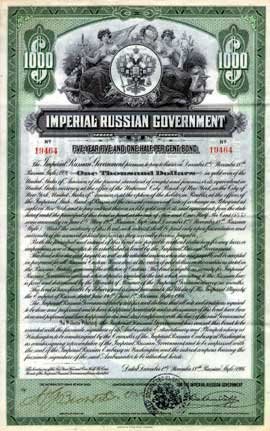
A junk bond is typically a high-interest loan with relatively unfavorable terms to compensate for a high risk of default. Junk bonds are a type of high-yield debt, and by far the most common.

Bonds are rated according to the credit rating of the borrower. In the US, the major rating agencies are Fitch, Standard and Poor’s, and Moody’s. The rating scheme in descending order of value is: AAA, AA, A, BBB, BB, B, CCC, CC, C, D. Anything rated BB or below is generally considered to be a junk bond because the credit risk is so great.

In the modern economy, bonds are traded like any commodity. Investment companies try to maximize their profit by balancing the safety of an investment with the cost of the bond on the market. Junk bonds are very attractive to some investment groups because of their low cost.

In some cases, an investor may be prohibited by the bylaws of the group they belong to, such as a company pension fund, from purchasing any bonds rated below A or BB. This limitation makes the junk bond market considerably more limited than the market for high-graded bonds, commonly referred to as investment-grade bonds.

The use of the junk bond is widespread throughout sectors that require significant amounts of capital to operate. The telecommunications and energy sectors are two industries which utilize the junk bond extensively. Recently it has come to light that a number of companies have manipulated the appearance of their debt to help them receive a higher rating on their bonds so they could more easily trade them on the market.

Enron is probably the best known example of a company distorting apparent debt to make their portfolio not consist primarily of junk bonds. By hiding much of their debt off-book, Enron received higher ratings than they would otherwise have earned. WorldCom, similarly, was initially not rated as a junk bond company because of illicit accounting practices.

The junk bond also plays an important role in the leveraged buyout and hostile takeover, allowing groups of investment bankers to raise large amounts of capital to use in acquiring a target corporation, paying off the junk bond interest with the newly acquired corporation’s cash flow.

By Brendan McGuigan

http://www.wisegeek.com/

What Is A Penny Stock?


Always Hear The Term Penny Stock But Got No Idea

The term penny stock has evolved with the market. In the past, penny stocks were stocks that traded for less than a dollar per share. The SEC, however, modified the definition to include all shares trading below $5.

If some of these stocks now trade above $1, why are they still called penny stocks? Well, even though some of these stocks may be selling for more than pennies, they are still called penny stocks because they are perceived the same way that stocks trading under a dollar were perceived in the past: as very risky investments. Penny stocks are typically growing companies with limited cash and resources. In other words, most penny stocks are high-risk investments with low trading volumes and limited attention from investors. These companies trade mostly on the OTCBB and Pink Sheets and are susceptible to different forms of market manipulation that are less prevalent and more difficult to employ in stocks found on the Nasdaq and NYSE.

So, be wary of penny stocks. The chances of huge profit are counteracted by even bigger chances of huge loss. Also, don't be fooled by people telling you that companies like Microsoft were once penny stocks. This is a fallacy: Microsoft never was (and very likely never will be) a penny stock.

By Investopedia.com

http://www.investopedia.com/

Health In The Office


Know Your Health When In Your Office

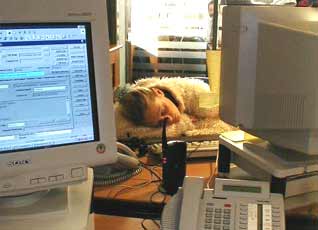
Many people suffer health problems from work but few expect to get them from working in an office.

However thousands of people each year suffer office related injuries and disorders, which could be easily prevented with just a little care and preparation.

One of the most common causes of health problems in office workers is an incorrect posture while sitting at their desk, especially when they are using a computer. This can cause disorders affecting the back, neck, shoulders, arms, wrists, hands and fingers.If you are currently experiencing any discomfort whilst sitting at your desk you should seek advice from your Health and Safety representative or see your GP.

Your Chair

Your chair should be adjustable so that the height, back position and tilt of the chair can all be altered. The correct sitting position should be:

Sitting up straight with good back support (you can add support with a rolled up towel behind your back if necessary)

Knees should be level with your hips

Feet should be flat on the floor (a footrest can be used if feet are not on floor. Avoid crossing or twisting your legs as this can also cause problems)

The Computer

It is also important that your computer is position correctly to avoid discomfort.

The computer monitor should be positioned 12-30 inches from your eyes (an arms length is a good guide). The top of the screen should ideally be at eye level. The screen should be glare free, which may mean positioning it so that any sunlight or artificial lights do not reflect on your screen. If you are unable to find a suitable glare free position, anti glare screens are available that attach to the front of the monitor. Changes to the brightness and contrast of the screen can also help.

Eye Strain

Many people suffer eyestrain from working, or playing, on a computer for long periods of time.
Eyestrain means a sensation of tired eyes, which may be accompanied by increasing difficulty focussing or seeing, dryness, headache and general discomfort. Working at a computer screen or VDU greatly increases the risk of eye stain and may lead to Computer Vision Syndrome. For more information on this see:
www.aoa.org/clincare/environmental-effects.asp.

It is very important therefore that you look after your eyes whilst at work.You can reduce the strain put on your eyes by:

Using the correct posture as described above

Use a document holder next to your screen so that your eyes do not need to keep refocusing

Adjust the controls on your monitor so that the brightness of the screen is comfortable

Use a style and size of font that is comfortable. Small fonts can cause your blood pressure and stress levels to rise

Light the screen from above or behind with a table lamp

Use an anti glare device

Use vases of flowers or damp plants in your work space to ensure that the air is not too dry (dry air attracts dust and irritates the eyes)

Take frequent short breaks allowing your eyes to rest and refocus (approx 5-10 minutes every hour)

Wherever possible swap to tasks which do not involve using the computer as often as possible.It is estimated that one in three people are working with sight defects that have never been diagnosed or are not properly corrected.

Get your eyes tested at least once per year and more often if you have any of these symptoms:

Problems seeing or reading

Blurred vision

Headaches

Dizziness

Pain in the Eyes

Watery Eyes

Dry eyes

By Macclesfield Borough Council

http://www.macclesfield.gov.uk/

The Effects Of Poor Posture


Poor Posture


Your posture is second nature to you, a taken-for-granted habit. This means that you have control of it. Often, poor posture develops because of accidents or falls. However, poor posture usually develops from environmental factors or bad habits.

Poor posture can start a progression of symptoms in the average adult. It can start with fatigue, tightness and joint stiffness.

If you have poor posture, your muscles have to work hard just to hold you up if you have poor posture. You waste energy just moving, leaving you without the extra energy you need to feel good.

A lifetime of poor posture can cause changes in your muscles and ligaments and you may have a stiffness, tightness and painful feeling. Majority of the spine-related problems are the result of muscles changes brought on by years of bad posture.

Poor posture and limited spinal mobility increase the likelihood of the degenerative osteoarthritis in later years.

When you have poor posture, the body's proper vertical position is out of alignment and the back's natural curves become distorted.

Head Forward or Slouched Posture:

Rounded shoulders

Head forward, rounded upper back

Arched lower back

Protruding buttocks

Chest flattens


Abdominal organs sag, crowding and making more work for heart and lungs

Seen often in women who have osteoporosis in later years

Military posture

Head pulled back

Shoulder blades tightly pulled back

Arched lower back

Arched lower back

Knees locked (straight)

Minimizes the spinal column's ability to be a shock absorber for the body

Slumped sitting posture

Upper back humped or too rounded

Head forward

Rounded lower back

Often starts in teenage years

By GlobalSpine.net

http://www.globalspine.net/poor_posture.html

What Women Need To Know About Investing


Woman Should Learn About Investing

Women need to take special care when it comes to their finances. A couple of common facts about women and their financial health may influence your future.

Women, on average, live five to seven years longer than men. This means the time horizon you plan for needs to be specific to you, not to a couple. Older women are one of the fastest growing poverty segments.

Women typically make less money. For all the improvement of women’s rights, women still earn about 75 cents of every dollar that men earn.

Because of this, here are a few tips to consider about your financial future:

Proactively save for your retirement

On average, women stay home 12 years with children instead of working outside the home. So they are less likely to participate in a company-sponsored retirement plan. Stay-at-home moms can, however, participate in a spousal IRA, which can be established either as a traditional or a Roth IRA.

If saving is difficult, take advantage of PIPs

Society pressures us to spend, not save. Consider setting up a periodic investment plan (PIP). A PIP is an automatic purchase plan, usually of a mutual fund. Once you do the paperwork, money is deducted automatically from your account.

Get educated

Learn the basics about financial management and investing. Take a class through a reputable source where the instructor is not going to try to sell you products. Look to your local community education or college. Read books.

Get involved

Don’t passively delegate the investment of your money to someone else. Ask questions and expect to understand the responses. Don’t be intimidated by jargon. Ask them to explain their response to you differently, and to your satisfaction.

Have a trusted professional

The key word is trusted. Do your due diligence. Ask other women for recommendations. Look for a qualified individual. Professionals in the field of financial planning usually will have the Certified Financial PlannerTM designation (CFP®), although many other reputable designations are out there. Interview several professionals to get a sense of who speaks your language and whom you are comfortable with.

By commonwealth.com

http://www.commonwealth.com/

Ten Secrets To Success


Master Them And You Might Be More Successful

Over the years, they discovered that most successful people have 10 traits in common. And that these 10 traits-together-help successful people meet their goals and turn their dreams into reality. How many of these 10 traits do you have?

How you think is everything.

Remember to "think positive" at every opportunity. Visualize success, not failure. Avoid negative environments and people. You are what you think.

Decide on your dreams and goals.

Be specific about your goals. For example, say "I am taking a cooking class next month," rather than "I would like to take a cooking class sometime." Create a plan to reach your goals, and stick to it.

Take action.

Goals alone have no meaning; you need to take action to make them real. Don't let fear hold you back. Just do it.

Never stop learning.

Take classes, go back to school, read books, join a discussion group. If you are interested in a subject, make time to learn about it. Keep acquiring new skills.

Be persistent and work hard.

You've probably heard the _expression, "success is a marathon, not a sprint." Keep your eye on the goal, and keep working toward it. Don't give up.

Learn to analyze details.

Get all the facts, and ask for input. You will make wiser decisions. Acknowledge your mistakes, but don't beat yourself up. Learn from your mistakes.

Focus your time and money.

When you believe in something, put your attention and energy there. Don't let people or things distract you.

Don't be afraid to innovate; be different.

Be true to yourself, and have your own ideas. Following the crowd is a path to mediocrity.

Deal and communicate with people effectively.

No person is an island. Communicate your thoughts and desires honestly, and encourage others to communicate honestly with you. Practice understanding and motivating other people.

Be honest and dependable; take responsibility.

Never cheat or lie. When you make a promise, keep it. When you screw up, admit it. Without honesty, dependability and responsibility, the other secrets for success don't matter.

By fastcashathome.com

www.fastcashathome.com

Sunday, January 22, 2006

Happy People May Have More Immunities To Common Cold


Fight The Cold By Being Happy


People who are energetic, happy and relaxed are less likely to catch colds, while those who are depressed, nervous or angry are more likely to complain about cold symptoms, whether or not they get bitten by the cold bug, according to a recent study.

Study participants who had a positive emotional style weren't infected as often and experienced fewer symptoms compared to people with a negative emotional style, say Sheldon Cohen, Ph.D., of Carnegie Mellon University and colleagues, writing in the July issue of Psychosomatic Medicine.

Cohen's team interviewed 334 healthy volunteers three evenings a week for two weeks to assess their emotional states. The volunteers described how they felt that day in three positive-emotion areas: vigor, well-being and calm. They were also questioned about three categories of negative feelings: depression, anxiety and hostility.

Other scientists have speculated that people who typically report experiencing negative emotions are at greater risk for disease and those who report positive emotions have less risk, says Cohen.

After their assessment, each volunteer got a squirt in the nose of a rhinovirus -- the germ that causes colds. The researchers kept the subjects under observation for five days to see whether or not they became infected and how they manifested symptoms.


"We found that experiencing positive emotions was associated with greater resistance to developing a common cold," Cohen reports. "Increases in positive emotional styles were linked with decreases in the rate of clinical colds, but a negative emotional style had no effect on whether or not people got sick."

A positive emotional style actually had no effect on how often volunteers were infected (as measured by replication of the virus) but produced fewer signs and symptoms of the illness, says Cohen. This suggests that inflammatory chemicals produced by the body may link the positive emotional style with colds.


Further analysis revealed that good health practices and lower levels of certain hormones did not account for the link between positive emotional style and illness.


Since the average person catches two to five colds a year, developing psychological risk profiles and considering ways to enhance positive emotion might reduce the risk of colds -- and by extension, other infectious diseases.


The study was supported by grants from the National Institute of Mental Health and the John D. and Catherine T. MacArthur Foundation Network on Socioeconomic Status and Health.

By Center For The Advancement Of Health

http://www.sciencedaily.com/

Caring For Your Mouth: Tips Tor Healthy Teeth And Gums


Maintain A Healthy Smile With A Few Simple Oral Hygiene Habits.

Don't take your smile for granted. Maintain a healthy mouth by routinely practicing good oral hygiene habits and reporting problems.

Routine care

Clean your teeth daily and see your dentist one to two times a year to prevent gum disease and other oral problems.

To clean your teeth properly, brush them at least twice a day — plus preferably after each meal and snack — and floss daily. Also follow these other tips:

Use a soft-bristled brush — it's gentler on the gums.

Place your brush at an angle against your teeth, and use short back-and-forth motions to clean your teeth. Also clean the inside and chewing surfaces of the teeth and your tongue.

Replace your brush every three months.

When you floss, gently ease the floss between your teeth. Then pull the ends of the floss against the front and back surface of a tooth so that the floss forms a "C" as it wraps around the tooth. Gently pull the floss from the gumline to the top of the tooth to scrape off plaque. Remember to floss the backs of your teeth and to expose fresh floss between your fingers as you progress through your teeth.

Report problems

In addition to regular care and dental appointments, call your dentist if you develop any of the following signs and symptoms of gum disease:

Red, tender, swollen gums

Gums that bleed when you brush them, even if they're not sore

Gums that are pulling away from your teeth; you may notice that your teeth seem longer

Pus around your teeth and gums when you press on the gums

A continual bad taste in your mouth

Loose teeth

Changes in the way your top and bottom teeth touch, or changes in the feel of your dentures

The benefits of a healthy mouth

Good oral hygiene doesn't have to be difficult. Get in the habit of taking a few simple steps each day and seeing your dentist regularly. You'll be setting yourself up for a brighter smile and for better overall health, too.


By mayoclinic.com

http://www.mayoclinic.com/health/dental/DE00003

Hiring a Financial Adviser


Looking For Your Financial Advisor

The best financial adviser you'll ever find is staring back at you in the mirror, but if, upon further reflection, you opt to hire one, here's how to make sure you hook up with someone top-notch:


Get three names.

Ask friends and colleagues for referrals, and gauge how enthusiastic they are about their planner. Don't be swayed when a friend says, "My adviser is a really great woman! You'll love her!" Who cares if she has a sparkling personality? This is strictly business: Does the adviser make smart investment and financial planning suggestions? Does your friend hear from her all the time, even during down markets? That's all that matters. If you can't rustle up any solid referrals from friends and colleagues, visit the Financial Planning Association website, fpanet.org, and the National Association of Personal Financial Advisors website, napfa.org.

Do the research.

Find out what sort of return the adviser's recommendations have delivered. The returns should have earned at least three percentage points more than a bank CD. For example, if over the past three years (long enough to get a fair picture of the adviser's investment talent), your friend could have earned 3 percent annually in a bank CD, the adviser's stock picks should have generated average annual returns of at least 6 percent.

Schedule a meeting.

You should meet at least three potential advisers in person. You can start sizing them up on the phone: If you are married or in a life partnership, the adviser should make it mandatory that both of you come to the meeting. A good adviser understands how important it is to know your emotional and financial needs. And give the adviser's office a once-over; if someone you are going to entrust with your finances can't keep her own records and documents in order, do you really expect her to take care of yours?

Listen for key information.

If you walk in and the first thing the adviser asks you is how much money you have to invest, walk out. She is interested only in making a profit off you, not in working with you to build a strong financial future. An adviser should ask about your goals, your job security and health, whether you have a will or trust, if you currently own a home or plan to in the future, and what your outstanding credit card debt is. If you have children, the adviser should talk to you about life insurance and what your plans are for their college education. A smart adviser will ask if you expect to receive an inheritance or whether you anticipate needing to provide financial support for your parents. And when the conversation comes around to investing, she should ask questions that gauge your timeline (e.g., do you need to access your money in five years or in 30?) and your tolerance for risk. A professional will tell you her fee structure up front. Advisers are paid either by commissions they get from financial products you purchase or from flat fees you pay them regardless of what you buy. It's best to work with fee-only advisers; advisers who rely on a commission have a conflict of interest.

By Suze Orman

http://www.oprah.com/omagazine/

What is Inflation?


Inflation

Inflation is defined as a sustained increase in the general level of prices for goods and services. It is measured as an annual percentage increase. As inflation rises, every dollar you own buys a smaller percentage of a good or service.

The value of a dollar does not stay constant when there is inflation. The value of a dollar is observed in terms of purchasing power, which is the real, tangible goods that money can buy. When inflation goes up, there is a decline in the purchasing power of money. For example, if the inflation rate is 2% annually, then theoretically a $1 pack of gum will cost $1.02 in a year. After inflation, your dollar can't buy the same goods it could beforehand.

There are several variations on inflation: Deflation is when the general level of prices is falling. This is the opposite of inflation. Hyperinflation is unusually rapid inflation. In extreme cases, this can lead to the breakdown of a nation's monetary system. One of the most notable examples of hyperinflation occurred in Germany in 1923, when prices rose 2,500% in one month! Stagflation is the combination of high unemployment and economic stagnation with inflation. This happened in industrialized countries during the 1970s, when a bad economy was combined with OPEC raising oil prices.

In recent years, most developed countries have attempted to sustain an inflation rate of between 2-3%.

Causes of Inflation

Economists wake up in the morning hoping for a chance to debate the causes of inflation. There is no one cause that's universally agreed upon, but at least two theories are generally accepted:

Demand-Pull Inflation - This theory can be summarized as "too much money chasing too few goods." In other words, if demand is growing faster than supply, then prices will increase. This usually occurs in growing economies.

Cost-Push Inflation - When companies' costs go up, they need to increase prices to maintain their profit margins. Increased costs can include things such as wages, taxes, or increased costs of imports.

Costs of Inflation

Almost everyone thinks inflation is evil, but it isn't necessarily so. Inflation affects different people in different ways. It also depends on whether inflation is anticipated or unanticipated. If the inflation rate corresponds to what the majority of people are expecting (anticipated inflation), then we can compensate and the cost isn't high. For example, banks can vary their interest rates and workers can negotiate contracts that include automatic wage hikes as the price level goes up.

Problems arise when there is unanticipated inflation:

Creditors lose and debtors gain if the lender does not anticipate inflation correctly. For those who borrow, this is similar to getting an interest-free loan. Uncertainty about what will happen next makes corporations and consumers less likely to spend. This hurts economic output in the long run. People living off a fixed-income, such as retirees, see a decline in their purchasing power and, consequently, their standard of living. The entire economy must absorb repricing costs ("menu costs") as price lists, labels, menus and more have to be updated. If the inflation rate is greater than that of other countries, domestic products become less competitive. People like to complain about prices going up, but they often ignore the fact that wages should be rising as well. The question shouldn't be whether inflation is rising, but whether it's rising at a quicker pace than your wages.

Finally, inflation is a sign that an economy is growing. In some situations, little inflation (or even deflation) can be just as bad as high inflation. The lack of inflation may be an indication that the economy is weakening. As you can see, it's not so easy to label inflation as either good or bad -- it depends on the overall economy as well as your personal situation.

By aboutdinar.com

http://www.aboutdinar.com/viewtopic.php?t=36

Saturday, January 21, 2006

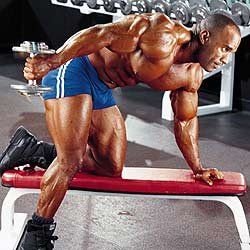
Tone That Triceps With Dumbbell Kickback


Building That Triceps

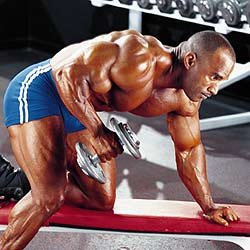
Dumbbell Kickback IFBB pro Darrem Charles states: "I typically do my final exercise with lighter weight and super-strict form."

Beginning


SETUP: "To start, take a stable position so you can't swing the weight up. As with the pressdown, hold your upper arm adjacent to your body."

Execution


EXECUTION TIP: "Control the motion to ensure that your triceps do all the work, and take each set to failure. Once the muscle begins to fatigue, I'll continue with partial reps -- I don't stop until the muscle is completely depleted of strength and my triceps are on fire."

By Darrem Charles


http://www.muscleandfitness.com/

How & When To Talk To Your Partner


Let's Talk

For any couple, communication is key to a healthy sex life. Unfortunately, shame and fear keep many women from speaking up. Partners need to talk about their sexual needs when they are both relaxed—not when they're under pressure. Discuss sexual issues outside of the bedroom, and stress the positives.

Dr. Hutcherson Recommends

To get what you want in bed, speak up!

You can't expect your partner to intuitively know what gives you pleasure. Be specific in describing what feels good and what you'd like to try.

Why not read a sexy book or watch an erotic video together? According to Dr. Hutcherson, it might ease communication and you might run across some new ideas to try together!

By Dr. Hutcherson

http://www.oprah.com/

Are You Sure You Are Insured?


Insurance Can Be Difficult To Understand

As recent natural disasters have taught us, we all need to give our insurance policies a checkup:

If you're in a flood zone or an area susceptible to hurricanes and strong storms, you need flood insurance: Damage from rising water isn't covered in standard policies. Ask your agent to help, and look into the federal policy offered by FEMA (www.floodsmart.gov). If you want your flood insurance to cover the contents of your home, you'll have to pay a higher premium. It's worth it.

Understand your replacement coverage. Make sure you know what it would really cost if you needed to buy or build a comparable home, given today's costs, and adjust your policy accordingly. Ask what you'd be paid if you decided to move to a different location.

Your possessions should also be insured for replacement cost. "Actual value" coverage might leave you dangerously underinsured; you'd be paid only the depreciated value of your lost items.

If you find yourself at odds with your insurer, don't give up. Ask for a detailed, written account of why your claim was denied, and challenge those findings. If that doesn't work, contact your state insurance department (look on www.naic.org) and file a complaint. For a loss resulting from a massive disaster, find others who were denied claims from your carrier and fight together—there's power in numbers.

By Suze Orman

http://www.oprah.com/omagazine/